
Many custom ideas fail before launch because drawings look good, but the real product later shows odor, poor feel, weak structure, slow sampling, or unstable mass production.
Custom silicone adult products succeed when concept, material, structure, tooling, sampling, compliance, and production are managed as one connected process. Strong factory development control is what turns a unique idea into a repeatable product.
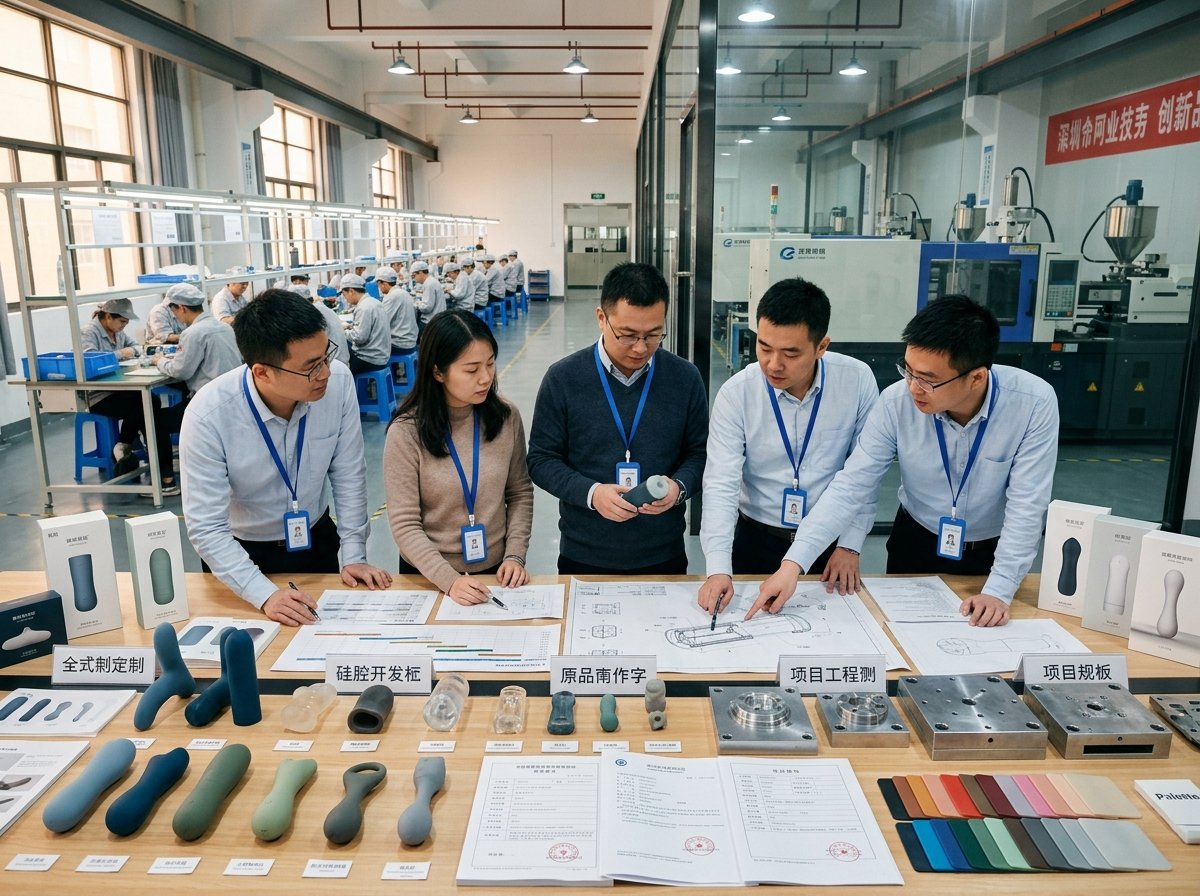
A custom silicone project is never only about making a new shape. It is about making a product that looks right, feels right, performs well, passes target market requirements, and can still be produced consistently at scale. That is why custom development should start with engineering logic, not only with inspiration images. In this industry, many market complaints come from the same root problems: thin areas that tear too easily, surfaces that attract dust or become sticky, strong smell after unpacking, poor durability at high-stress points, and final goods that do not fully match approved samples. A real factory with in-house design, R&D, and production control can reduce these risks much earlier in the process.
Why Is Custom Silicone Product Development More Complex Than It Looks?
A concept sketch may seem simple, yet custom silicone products often fail when softness, structure, and manufacturability are not balanced from the beginning.
Custom silicone development is complex because the final result depends on material behavior, wall thickness, hardness selection, mold strategy, internal structure, surface finish, and how all these factors hold up during real production and use.
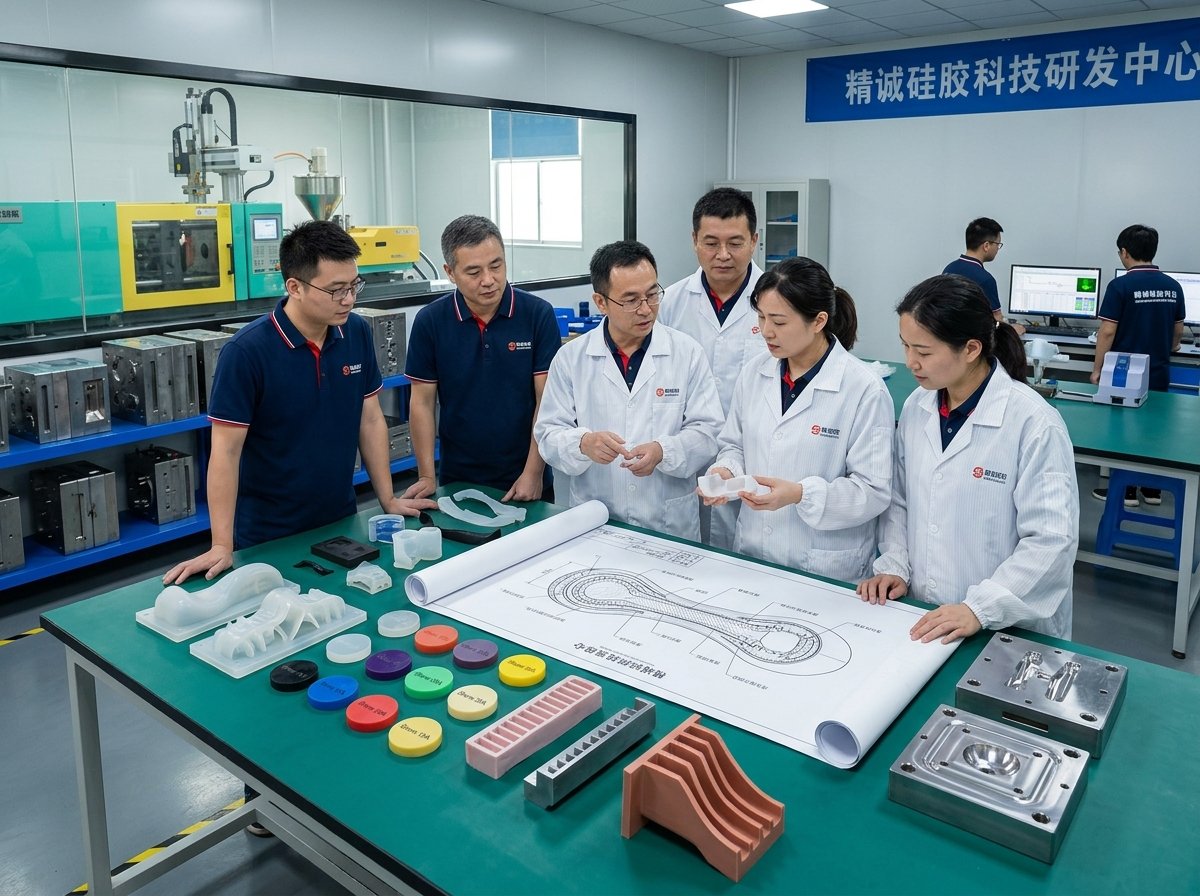
Silicone is flexible, skin-friendly, and premium in feel, but it is also demanding in development. A product can look excellent in 3D rendering and still become difficult in molding, trimming, coloring, sealing, assembling, or packaging. Thin sections may tear. Deep undercuts may complicate tooling. Softness that feels attractive in a sample may deform too easily in transport or repeated use. Some products also lose value when the design focuses too much on realism and not enough on durability, cleaning logic, or user handling.
This is exactly why custom development should be led by a factory team that understands both design and manufacturing. In-house designers can refine form and dimensions. R&D can review structure, hardness zones, bonding method, and functional details. Production engineers can judge whether the design can be repeated efficiently at scale. Sales coordination also matters because good projects depend on clear communication between concept approval, sample revision, and final order execution.
How to Develop Custom Silicone Adult Products from Concept to Mass Production?
A custom project moves faster when every stage has a clear job and a clear approval point.
The best custom silicone product process usually includes concept review, engineering evaluation, 3D design, prototype confirmation, mold development, sample testing, packaging approval, pilot production, and controlled mass production.
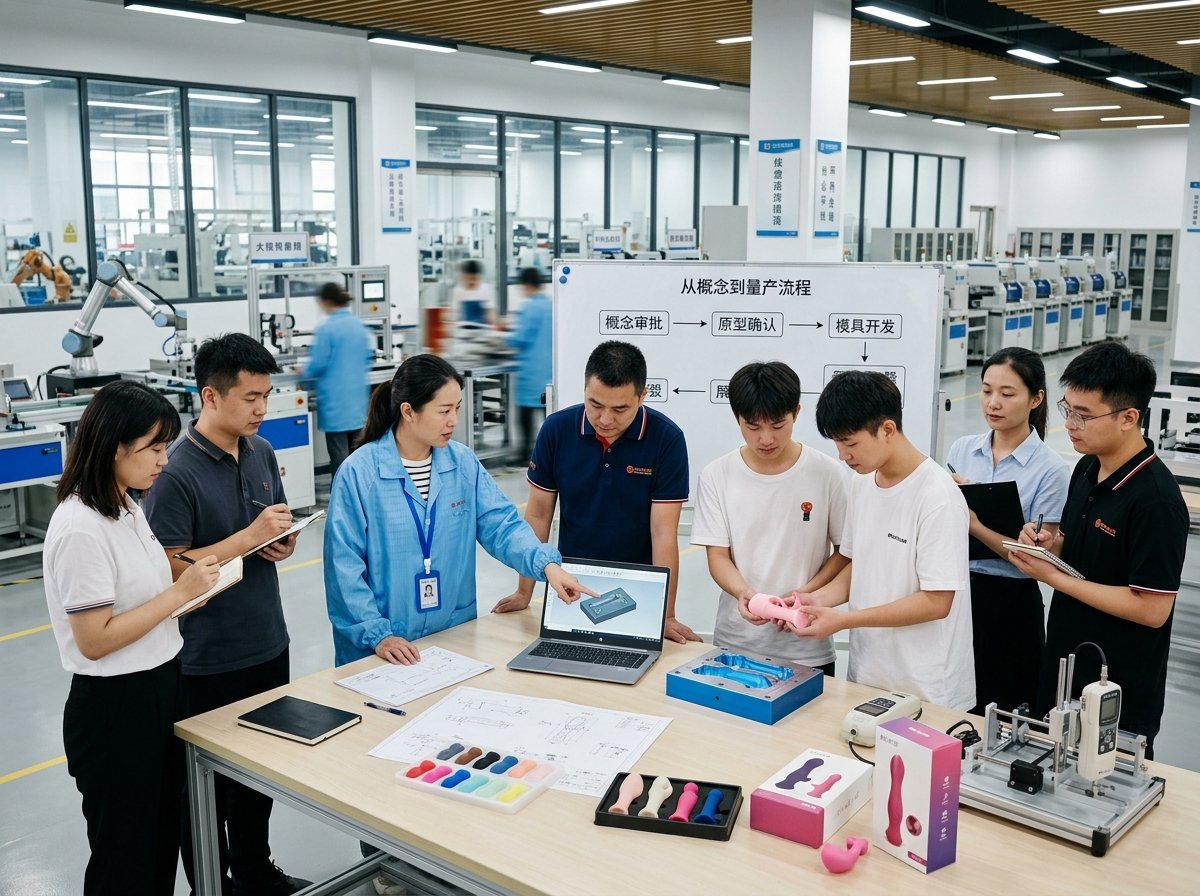
A structured path usually looks like this:
| Stage | Main Goal | Key Risk to Control |
|---|---|---|
| Concept review | Confirm product positioning and target market | Vague brief |
| Engineering review | Check feasibility, dimensions, structure | Design not manufacturable |
| 3D and prototype | Visualize and test shape, fit, function | Looks good but performs poorly |
| Mold development | Build repeatable tooling | Tooling not matched to design |
| Sample validation | Confirm feel, hardness, function, packaging | Sample not linked to production reality |
| Pilot run | Test production stability | Inconsistent output |
| Mass production | Deliver repeatable finished goods | Drift from approved sample |
The concept stage should define size, shape language, target softness, key functions, surface texture, color direction, package level, and target price band. After that, engineering review becomes critical. At this point, details such as wall thickness, parting line position, internal support, charging layout, sealing points, and cleaning path must be checked carefully.
Then comes prototype and sample work. This stage should not only judge appearance. It should also test touch, rebound, assembly fit, packaging space, and durability at sensitive points. Many complaints in the market begin because development teams approve a sample for looks, while ignoring long-term stress, storage conditions, and repeated handling.
What Buyers Should Prepare Before Starting a Custom Silicone Product Project?
A project slows down when the concept is exciting but the brief is incomplete.
Before starting a custom silicone project, buyers should prepare product direction, target market details, reference style, size range, function list, packaging idea, compliance goals, and expected order plan. The clearer the input, the faster the factory can develop correctly.
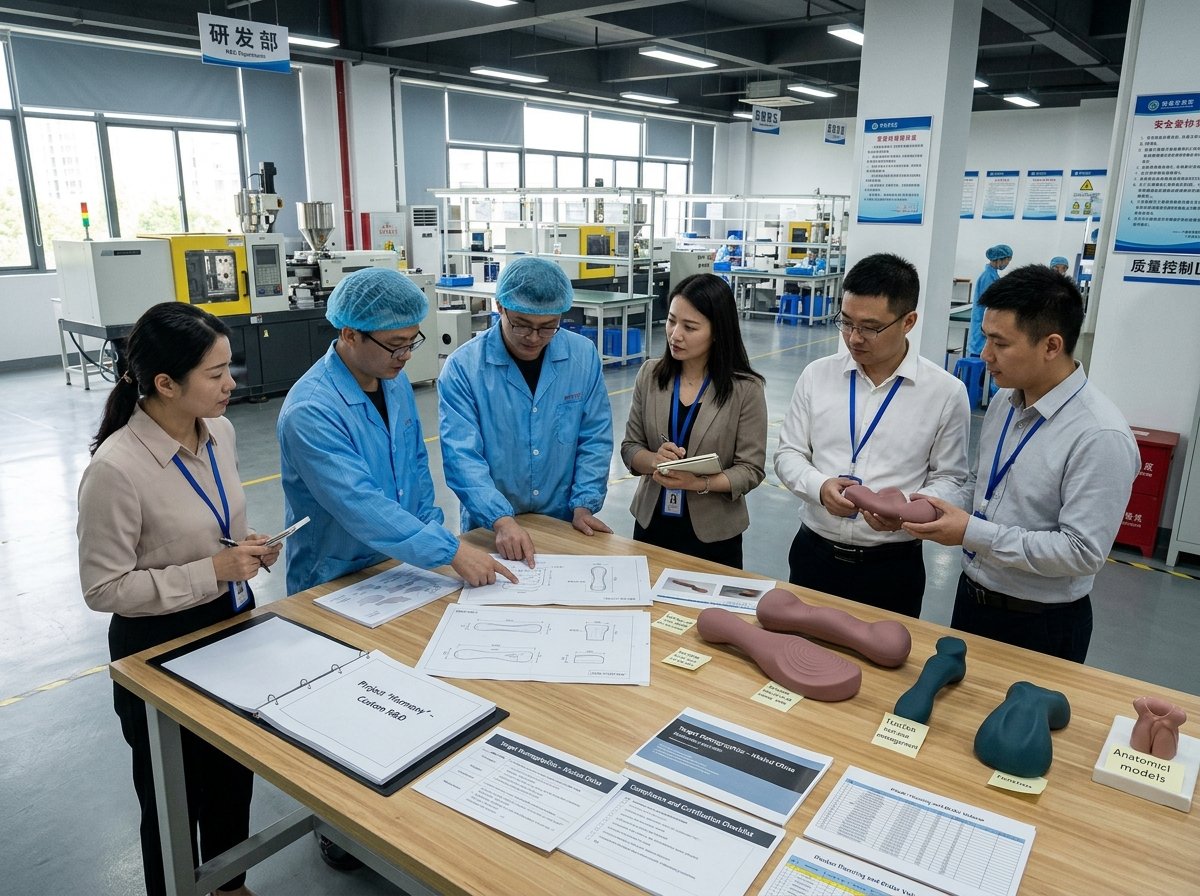
A strong project usually starts with practical information, not broad ideas alone. The factory needs enough input to turn vision into an actual product path.
Core items that should be prepared
- Product concept or reference images
- Target market and sales channel
- Approximate dimensions and desired feel
- Function requirements and usage scenario
- Price target and packaging expectation
- Certification or compliance expectation
- Forecast quantity and launch timing
This matters because different markets care about different things. Some buyers focus on unique appearance and private label identity. Some care more about stable quality, material compliance, packaging consistency, and repeat orders. Some need fast sampling for seasonal launch plans. Others need stronger confidentiality because the product is intended as a differentiated hero SKU.
A factory with OEM and ODM experience can help refine a rough concept into a workable project, but development becomes much smoother when the initial brief is already clear. This is especially true for buyers who want private label programs that can scale later rather than one short custom run.
What Technical Points Usually Decide Whether a Custom Silicone Product Will Succeed?
A product can fail even when the shape is attractive, because the real issue is often hidden in structure and process.
The most important technical points are silicone grade, hardness balance, wall thickness, stress transition, bonding method, surface durability, odor control, cleaning design, and packaging protection.
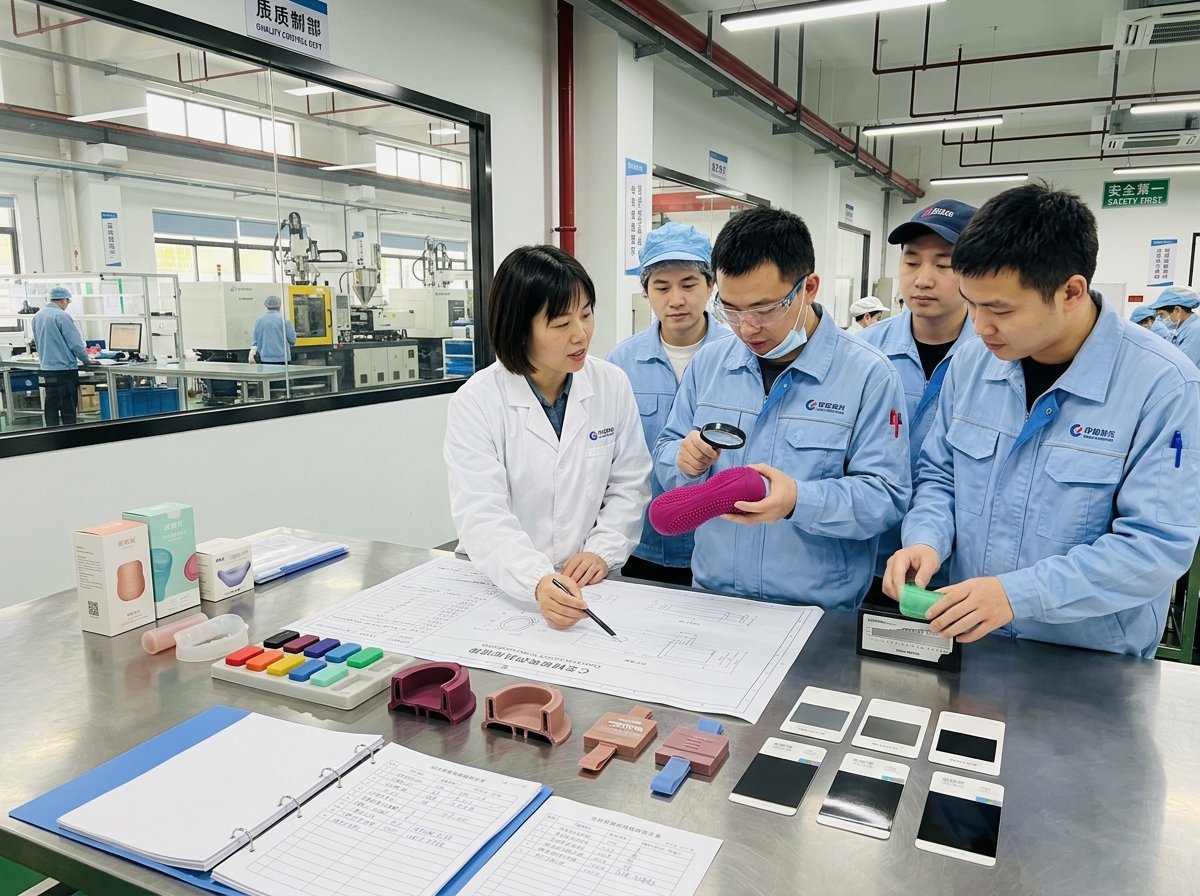
Repeated market complaints give clear warnings about what should be controlled early. Cracking, peeling, abrasion, sticky feel, strange odor, wrong softness, or damaged arrival are often preventable when the factory treats development as engineering, not only molding.
Key technical checkpoints
| Technical Point | Why It Matters | Typical Market Failure |
|---|---|---|
| Silicone material system | Controls feel, odor, rebound, durability | Unpleasant smell or unstable softness |
| Thickness design | Affects tear resistance and form stability | Thin sections tearing or collapsing |
| Radius and transition | Reduces stress concentration | Cracks at bends and edges |
| Surface treatment | Affects drag, dust pickup, and wear | Sticky or easy-to-scratch surface |
| Internal structure | Supports function and repeat use | Early loosening or poor usability |
| Packaging support | Protects shape and finish in transit | Deformation or shipping damage |
In custom projects, premium feel alone is not enough. The product must survive storage, transport, display, and real use. That is why a real factory should review not only the product body but also packaging pressure points, accessory contact areas, and final carton arrangement. In-house R&D helps a lot here because feedback can move faster from testing back to design revision.
Common Delays and Mistakes in Custom Silicone Product Development
A custom project rarely gets delayed for one big reason. Most delays come from small problems that were never defined clearly at the start.
The most common delays come from incomplete briefs, repeated design changes, slow sample feedback, unclear approval standards, unrealistic lead time expectations, and late changes to packaging or compliance requirements.
Several patterns appear again and again in custom projects.
Incomplete concept definition
A buyer may want a unique product but provide only inspiration photos. This creates back-and-forth revision because shape, size, softness, and functional details are still open.
Approving appearance without checking production logic
Some samples look good as hand-finished pieces but are hard to reproduce consistently. This leads to trouble later in tooling or mass production.
Late packaging decisions
Packaging is often pushed to the end, but size, insert structure, accessory arrangement, and protection method should be considered much earlier.
Weak control of compliance timing
If testing, labeling, or market file preparation starts too late, mass production may wait even when the goods are physically ready.
Frequent changes after tooling begins
Once molds are in progress, structural changes usually create cost and time pressure. This is why early engineering review is so important.
Misjudging real lead time
A realistic project schedule should separate design time, prototype time, mold time, sample revision, packaging confirmation, pilot production, and shipping. One short date on a quote sheet cannot explain all of that.
An experienced factory can reduce these delays by using a clearer project workflow, revision record, and approval system. This is one reason many established brands prefer to work with manufacturers that already have in-house design, R&D, and sales teams under one roof.
How Do We Reduce Risk in Custom Silicone Projects?
Good custom development is not luck. It is the result of systems that catch problems before the market does.
Risk is reduced through design review, material selection, sample testing, stress-point optimization, packaging validation, production checkpoints, and clear communication from concept to shipment.
A strong factory process should actively prevent the most common market failures:
- Wrong feel or unstable softness through better material control
- Tearing and cracking through wall-thickness and transition optimization
- Surface wear and tackiness through improved finish control
- Odor complaints through cleaner raw material systems and better post-processing
- Shipment damage through stronger packaging design
- Configuration mistakes through BOM, SKU, and final inspection checks
This is where factory ownership matters. A real manufacturer is not only forwarding messages. A real manufacturer can connect product design, mold development, production feedback, and quality improvement directly. Projects move more smoothly when the same team can review drawings, revise structures, test samples, and confirm production details. Experience supporting well-known brands as OEM and ODM partners also helps because expectations on consistency, confidentiality, and documentation are usually much higher.
Why Does Factory Capability Matter More Than a Low Price in Custom Silicone Projects?
Low cost at the beginning often becomes high cost after rework, complaints, or replacement orders.
In custom silicone development, factory capability matters more than a low price because poor engineering, unstable process control, and weak communication can quickly destroy the value of a unique design.
A custom product is supposed to create brand value. That only happens when the final goods match the approved concept, arrive safely, perform consistently, and support repeat ordering. A weak supplier may offer a cheaper starting point, but the hidden costs are often serious: extra sampling rounds, unstable color or texture, packaging failure, delayed launch, or returns caused by defects.
A factory with in-house design, R&D, and sales coordination can support custom development more effectively because each stage is linked. Design can be adjusted for manufacturability. Testing feedback can return to engineering quickly. Production problems can be corrected with real process action. For buyers, brand owners, distributors, and sourcing teams, this creates a much more reliable development path.
Conclusion
Custom silicone products become successful when design, engineering, compliance, and production work together from day one. As a real factory with in-house design, R&D, and sales teams, plus OEM and ODM experience with well-known brands, stronger support can be provided for custom development, private label growth, and long-term manufacturing cooperation. For companies planning the next custom silicone product, sending an inquiry and project brief is the best way to start a serious discussion.