
A factory may promise low cost and fast delivery, yet weak development control can quickly turn a private label project into complaints, returns, and lost trust.
The right OEM factory for private label sex toys should offer stable product development, realistic MOQ and lead time planning, reliable quality control, compliance awareness, and strong confidentiality. Factory capability matters more than a low quotation.
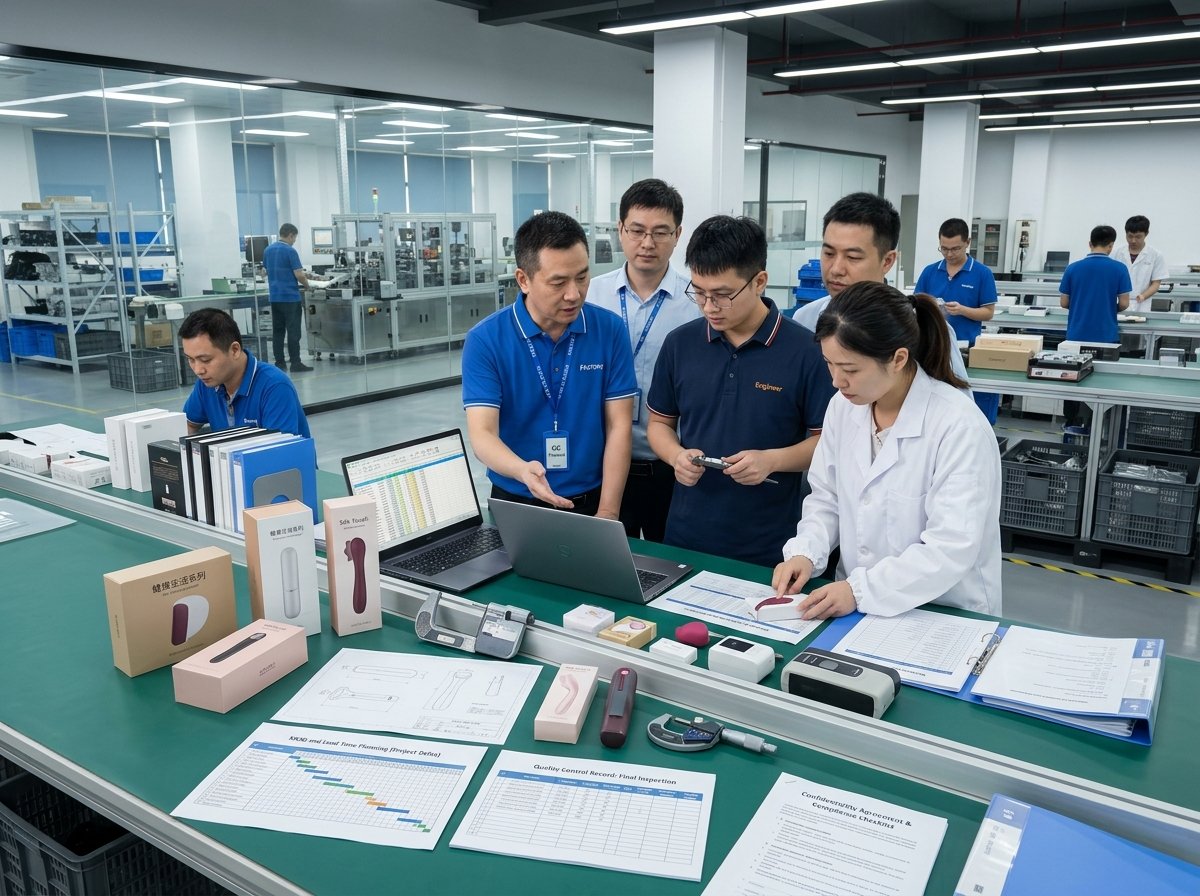
Choosing a manufacturer for private label sex toys is not only a sourcing decision. It is a brand decision. Product feel, consistency, packaging quality, delivery reliability, and complaint rate all start with the factory behind the product. In this category, many market failures are already easy to see. Buyers often face cracking in high-stress areas, odor complaints, unstable joints or internal structures, peeling surfaces, shipment damage, misleading product images, poor communication, wrong configurations, and delayed delivery. These are not random problems. Most of them begin with weak factory systems.
That is why private label buyers should look deeper than price sheets and polished sample photos. A real factory with in-house design, R&D, and sales support can usually manage product definition, engineering review, packaging coordination, and quality control far better than a supplier that only passes information from one side to another. For brands, distributors, sourcing teams, and product managers, the goal is not only to launch a product. The goal is to launch a product that can be repeated, trusted, and scaled.
Why Does OEM Factory Selection Matter So Much for Private Label Sex Toys?
A product may look acceptable in a first sample, but weak factory control often appears later during bulk production, shipment, and after-sales claims.
OEM factory selection matters because it determines how well a private label product can hold its quality, match the approved design, meet delivery plans, and avoid common market complaints.
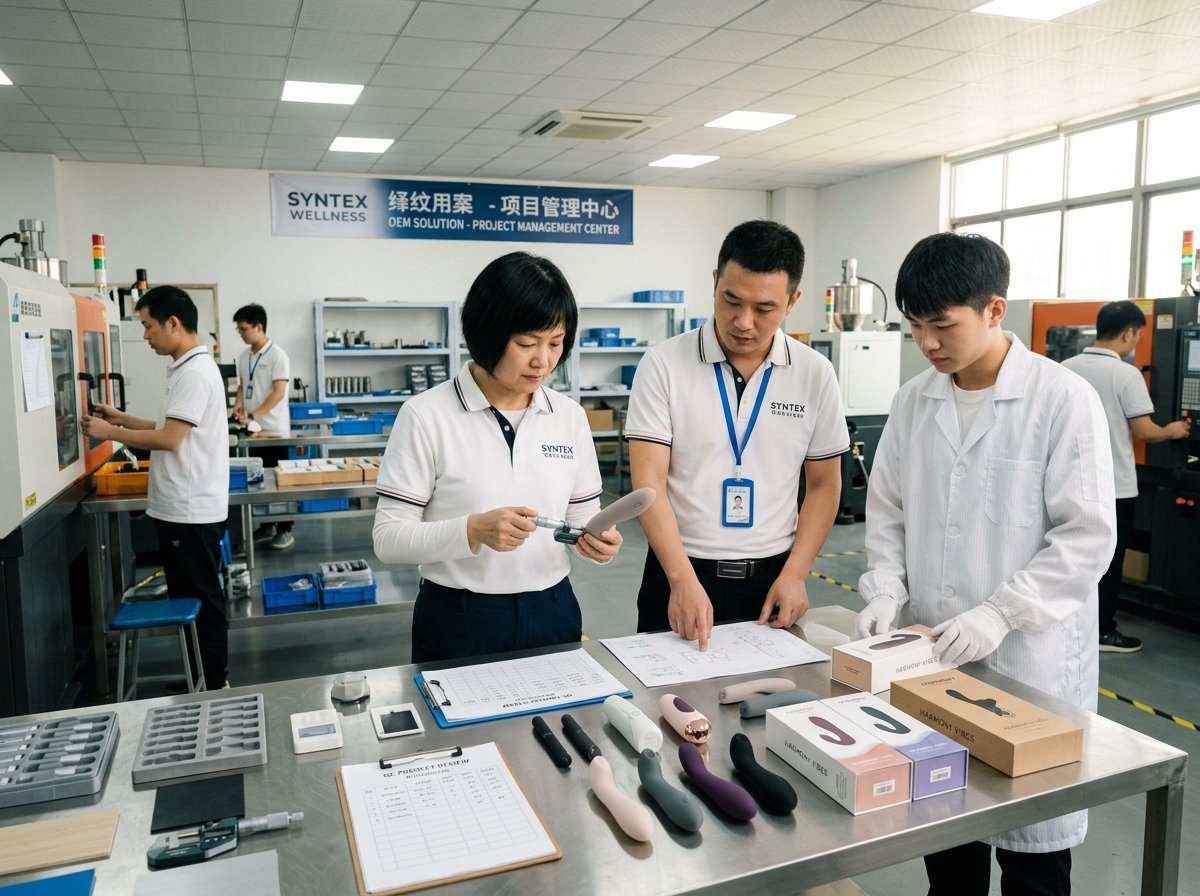
Private label projects often seem simple from the outside. Add a logo, adjust the packaging, confirm a color, and move to production. In reality, the process is more demanding. Once a product carries a brand name, every defect becomes a brand problem. A strong chemical smell, a sticky surface, poor surface durability, damaged arrival, or a wrong accessory pack may look like small factory mistakes, but in the market they become public complaints.
The adult product category also has more technical sensitivity than many buyers first expect. Material choice affects odor, softness, rebound, staining, abrasion resistance, and long-term aging. Structural design affects durability and usability. Packaging affects arrival condition and first impression. Communication affects whether the delivered goods truly match the approved version. This is why factory selection cannot be reduced to price and minimum order quantity alone.
A factory with real manufacturing ownership has a stronger chance of preventing these risks early. In-house design can improve shape and manufacturability. R&D can review stress points, material behavior, and functional layout. Production can control consistency. Sales can connect the project clearly from brief to shipment. This kind of coordination is especially valuable for buyers building long-term private label lines rather than one-off orders.
How to Evaluate an OEM Factory for Private Label Sex Toys?
A quote can be sent in one day. Real evaluation takes more than that.
The best way to evaluate an OEM factory is to check its development ability, sample logic, production systems, packaging control, communication discipline, and whether it can turn approved details into stable mass production.
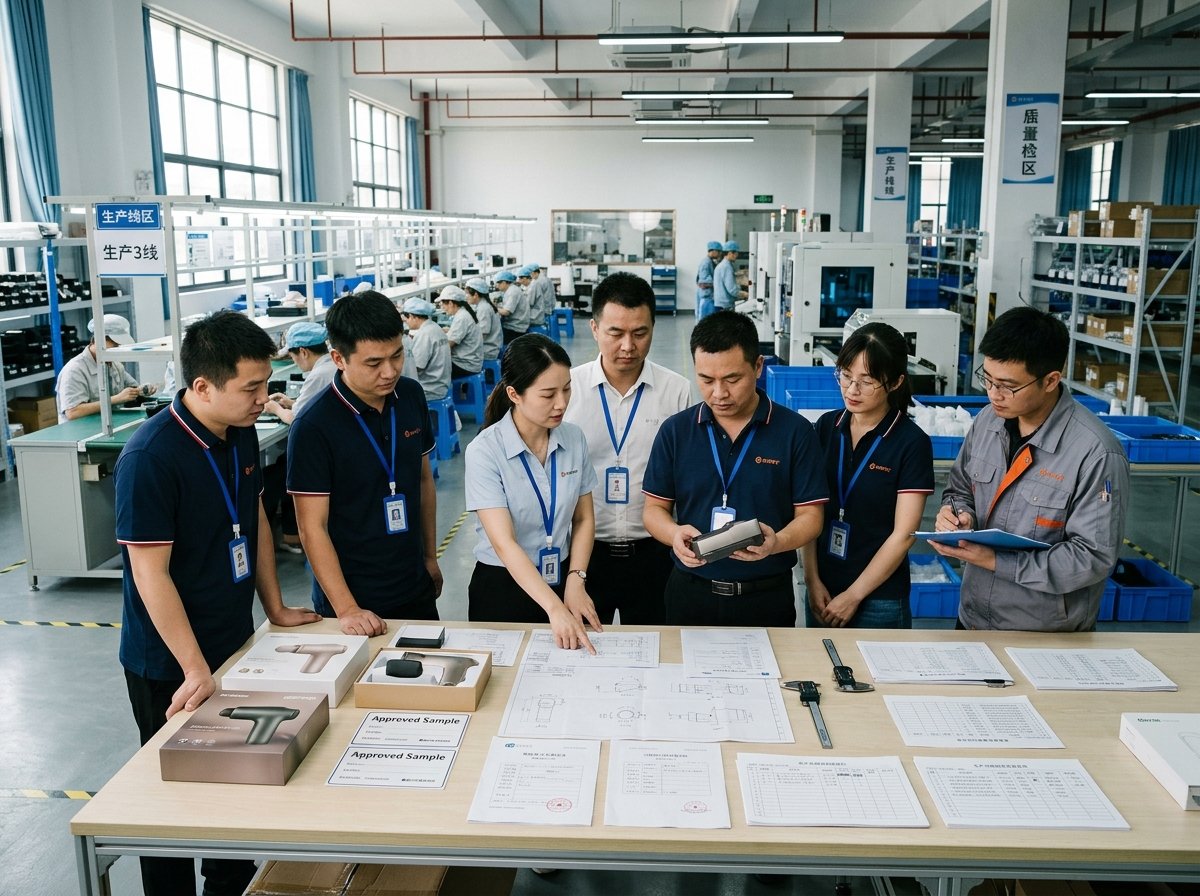
A useful evaluation starts with technical conversation, not only with catalog review. The factory should be able to discuss product material, softness targets, motor performance, battery configuration, charging structure, waterproof approach, surface finish, packaging options, and likely risk points. A supplier that can only repeat basic sales language may not have enough control over the real project.
Sampling is another major checkpoint. A good factory should treat sampling as a development stage, not a display stage. Samples should help confirm appearance, hand feel, function, packaging fit, and possible weak points. In this category, many complaints come from products that looked fine at first but later showed odor, easy scratching, unstable assembly, or mismatch between approved sample and shipped bulk goods. That is why sample review should ask whether the factory records revisions clearly and whether the final approved sample is linked directly to production standards.
Private label execution should also be checked carefully. Logo position, package insert, retail box quality, label accuracy, accessory completeness, and carton marks all affect the final result. A serious OEM factory should already have a method to connect artwork approval, BOM confirmation, packaging files, and final inspection records.
Real factory identity matters too. A genuine manufacturer is usually more capable of answering detailed questions about structure, tooling, molding, trimming, assembly, testing, and quality checkpoints. That matters when a project needs changes, troubleshooting, or future upgrades.
What Product Development Criteria Should Be Compared First?
A private label project often fails because buyers compare only visible features while ignoring the development system behind them.
The most important criteria to compare are product development depth, engineering feedback speed, sampling quality, manufacturability review, and the ability to solve common market pain points before bulk production starts.
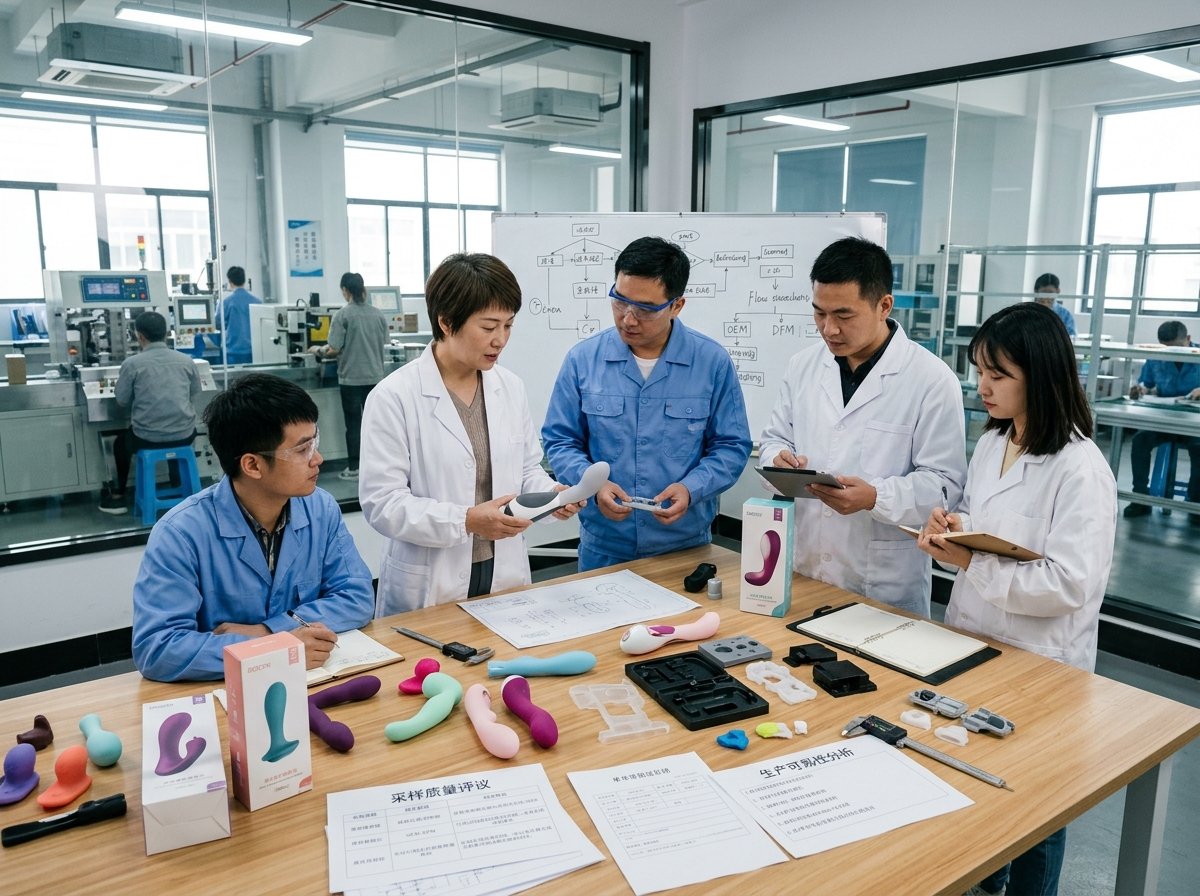
Not all factories support development in the same way. Some only offer standard items with surface-level branding. Others can support deeper product definition and refinement. This difference becomes critical when the market already has repeated complaints around durability, odor, surface wear, unclear maintenance instructions, internal looseness, and shipping damage.
A better factory comparison should include these points:
| Area | What to Compare | Why It Matters |
|---|---|---|
| Material understanding | Silicone grade, ABS quality, odor control, softness consistency | Affects feel, smell, safety perception, and stability |
| Structural review | Wall thickness, corners, stress zones, functional layout | Reduces cracking, tearing, and weak assembly |
| Prototype logic | Number of revisions, test feedback, improvement action | Shows real development ability |
| Packaging engineering | Box fit, internal support, accessory protection | Reduces damage and missing parts |
| Quality planning | Approval standards, inspection flow, photo record | Helps bulk goods match approved sample |
This is where a factory with in-house design and R&D has a real advantage. Development is faster when feedback does not need to pass through multiple outside parties. Changes can be reviewed and corrected earlier. For buyers entering private label adult products, that often means fewer delays and fewer hidden risks.
How Should Buyers Compare MOQ and Lead Time in Adult Toy OEM Projects?
The lowest MOQ and shortest lead time may look attractive, but unrealistic promises often create bigger problems later.
MOQ and lead time should be compared by product complexity, tooling need, packaging scope, testing requirements, and factory capacity realism. A reliable factory gives structured timelines, not vague promises.
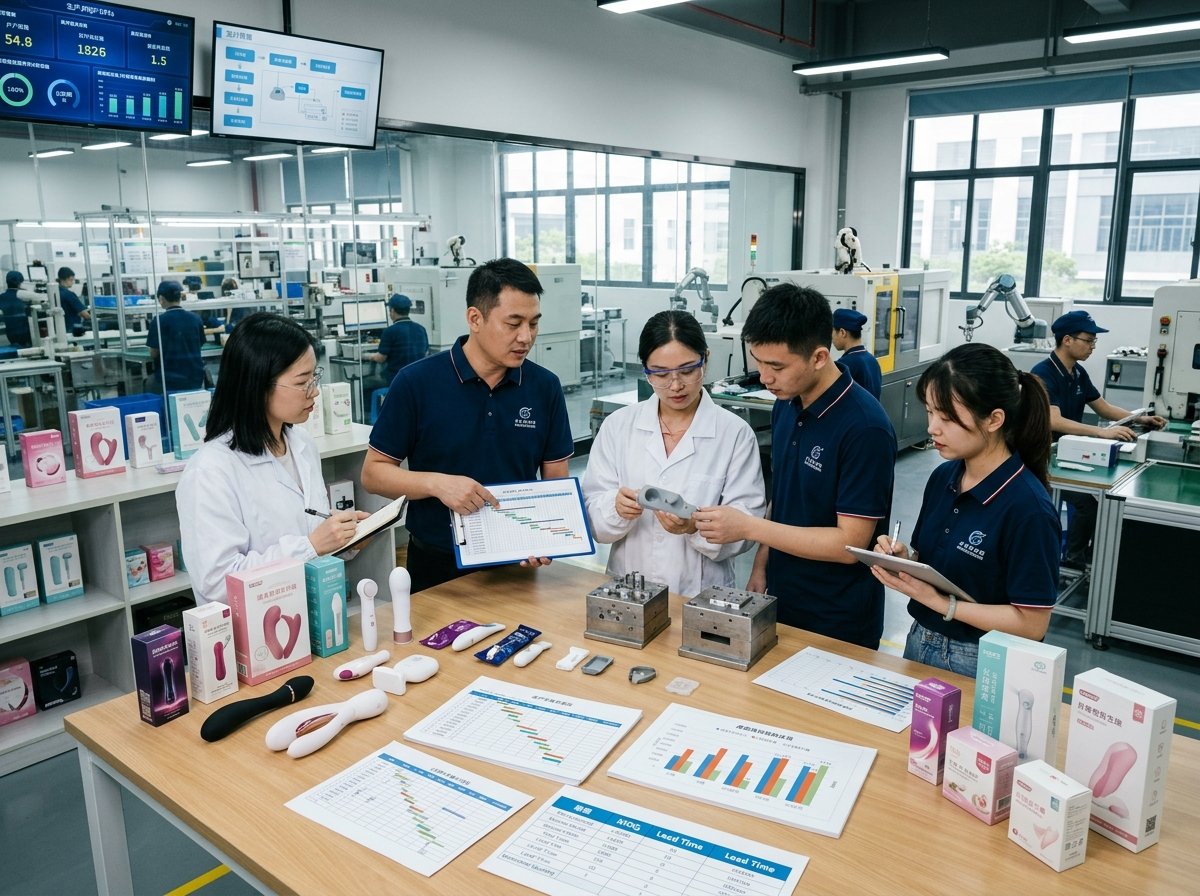
MOQ is not only a number. It reflects mold allocation, material planning, production setup, packaging supply, and factory willingness to support smaller branded runs. For private label buyers, especially those building new product lines, MOQ flexibility can be useful. Still, a very low MOQ sometimes means the factory is not producing under an efficient or stable system. The better question is whether the MOQ matches the product type and project goal.
Lead time should also be broken into parts. A realistic schedule usually includes:
- sample preparation
- artwork confirmation
- material and component planning
- production queue
- assembly and inspection
- packaging completion
- shipment handover
Many buyers get into trouble when one short lead time number is accepted without asking what it actually covers. In this industry, delayed shipment is one of the most damaging complaints because it affects launch plans, cash flow, and trust. A responsible factory should separate sample lead time, production lead time, and shipping coordination clearly.
Comparing MOQ and lead time also means comparing how the factory handles exceptions. If materials are delayed, packaging files change, or testing needs an extra step, is there a clear update process? Factories that already support known OEM and ODM customers usually perform better here because they understand that schedule transparency is part of quality.
What Quality and Compliance Standards Should Never Be Ignored?
A private label product can look ready for sale, yet weak quality systems or weak compliance preparation can create serious trouble later.
Buyers should never ignore material consistency, functional testing, appearance standards, packaging inspection, labeling accuracy, and market-facing compliance preparation. These standards protect both the product and the brand.
This category demands more than basic visual inspection. Product quality should be checked at several layers. Material quality affects odor, staining, softness drift, tackiness, and aging. Functional quality affects charging, vibration stability, noise, sealing, and usability. Cosmetic quality affects color consistency, finish, and retail appearance. Packaging quality affects whether goods arrive clean, complete, and protected.
Compliance matters as well, especially for buyers selling into North America, Europe, and Japan. Material documentation, restricted substance awareness, electrical safety preparation, battery handling, and labeling accuracy all affect whether a product can move smoothly into the target market. Even when exact requirements vary by product, the factory should already understand the compliance path well enough to support documentation and testing.
A buyer should also check whether the factory keeps batch traceability and inspection records. When complaints appear, traceability often decides whether the issue can be solved quickly or becomes a long dispute.
What Red Flags Buyers Should Watch for When Choosing a Private Label Sex Toy Manufacturer?
A poor factory often reveals itself early, but only if the buyer knows what signals matter.
Major red flags include unrealistic promises, weak technical answers, unclear sample control, no real quality standards, poor communication after quoting, vague confidentiality, and a gap between approved details and production execution.
Some warning signs are very common in this market.
Price-first selling with no technical depth
If the sales conversation focuses only on quotation while avoiding material details, stress points, packaging logic, and quality controls, that is a serious concern.
Overpromising short lead times
Factories that promise very fast delivery without asking about packaging, testing, artwork, or order complexity are often selling hope rather than planning reality.
Weak response on complaint prevention
The market already shows repeated pain points such as cracking, odor, abrasion, peeling, shipping damage, wrong configurations, and misleading product photos. A good factory should be ready to explain how these risks are prevented.
No clear approval system
If artwork, logo position, accessories, labels, and final specifications are not documented well, wrong shipments become much more likely.
Confusing factory identity
A supplier that cannot explain production flow, quality checkpoints, or engineering logic may not control the manufacturing stage directly.
Poor communication rhythm
Slow follow-up, missing answers, and unclear ownership before payment usually become worse after payment.
These red flags matter because private label projects depend on repeatability. If the first order goes wrong, the brand pays for the damage in reviews, replacements, lost customers, and delayed growth.
Why Does Confidentiality Matter in Private Label OEM Projects?
A private label product loses value quickly when packaging, design details, or launch timing are shared too freely.
Confidentiality matters because private label projects depend on brand differentiation, controlled artwork, protected specifications, and trust that custom details will not be copied or exposed carelessly.
In adult product manufacturing, confidentiality is more than signing an NDA. It includes how drawings, packaging files, photos, and samples are handled inside the factory. Buyers should look for real internal discipline. That means controlled project access, clear file management, cautious use of product photos, and separation between customer programs.
This is important because copied listings, unauthorized use of images, cloned products, and confusing seller overlap are all real market problems. For a private label brand, weak confidentiality can hurt pricing, launch timing, and retailer trust. A structured factory should understand that confidentiality is part of professional manufacturing, not an optional favor.
What Makes a Strong Long-Term OEM Partner?
A reliable manufacturer should support more than one order. It should support product growth.
A strong long-term OEM partner combines factory ownership, in-house design and R&D, quality consistency, realistic planning, confidential project handling, and experience serving demanding brand customers.
Long-term value comes from control and learning. A factory that reviews complaints, improves weak points, and documents project standards becomes more useful with every repeat order. This is especially important in a category where product feel, durability, packaging, and compliance can all influence whether a brand grows or struggles.
A real factory with in-house design, R&D, and sales support can provide a stronger base for private label development because the product, process, and communication are connected. Experience with OEM and ODM projects for known brands also usually improves discipline in specification control, quality execution, and after-sales support.
Conclusion
The best OEM factory for private label sex toys is not simply the one with the lowest quote or the fastest promise. It is the one that can develop stable products, control quality, manage realistic MOQ and lead time, protect confidential details, and deliver goods that truly match the approved standard. For brands, distributors, buyers, and sourcing teams looking for a dependable manufacturing partner, a real factory with in-house design, R&D, and sales coordination offers a stronger path to safer product launches and more stable long-term cooperation. Inquiry and contact details are welcome for teams ready to discuss the next private label project.