
A polished sample means little when mass production later brings odor issues, unstable quality, shipment damage, or products that do not match the approved design.
The right adult toys manufacturer should combine stable production, in-house development, compliance control, confidentiality systems, and reliable quality execution. Factory strength matters far more than a low quotation or a fast promise.
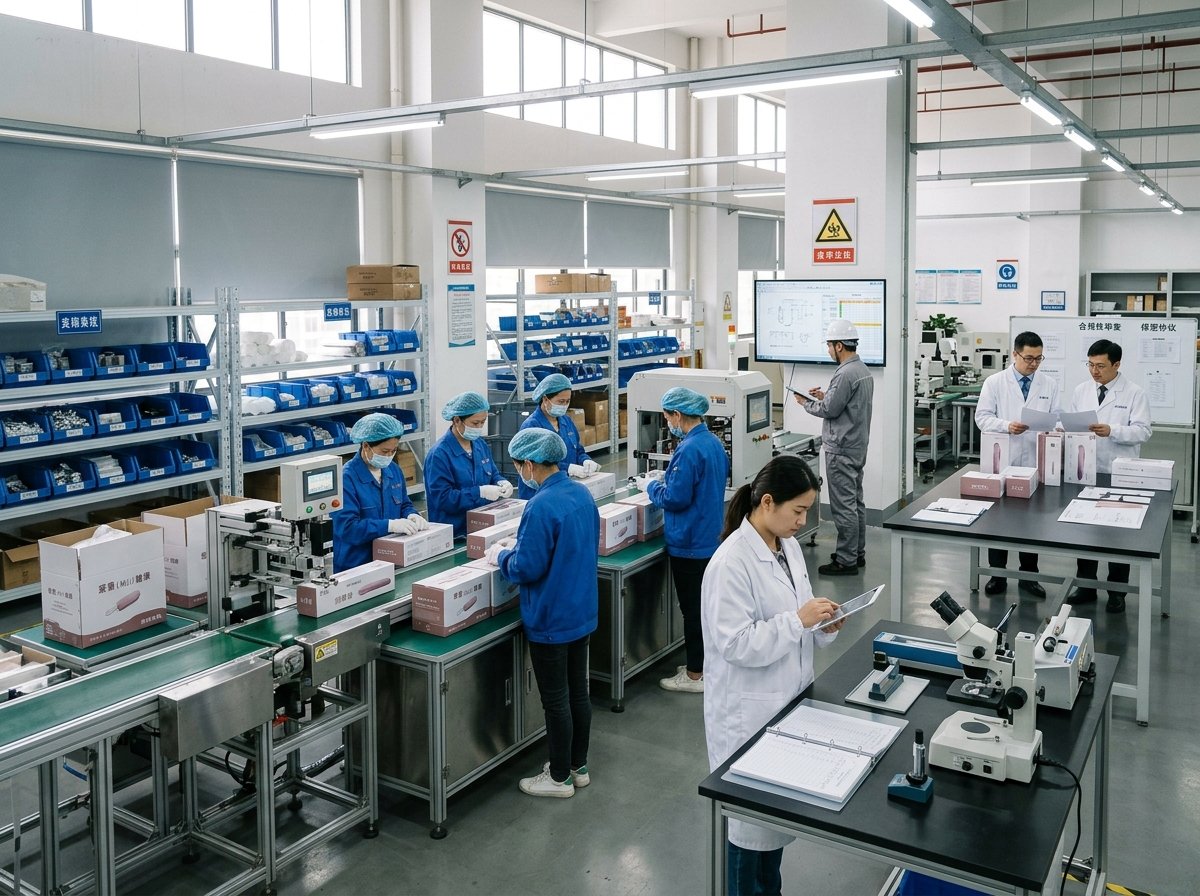
Factory selection shapes almost everything that follows. Product quality, delivery reliability, private label consistency, complaint rates, and long-term brand reputation all depend on this early decision. In the adult product industry, that risk is even higher because buyers often face material sensitivity, compliance pressure, confidential product development, and strict expectations on finish, safety, and durability. A real factory with in-house design, R&D, and sales coordination can reduce many of these risks before they become expensive market problems.
Why Does Factory Selection Matter So Much in Adult Toy Manufacturing?
A supplier may look professional in a catalog, yet hidden weaknesses often appear only after sampling, mass production, or customer complaints.
Factory selection matters because it affects product stability, customization depth, compliance readiness, delivery consistency, and how well common market failures are prevented before launch.
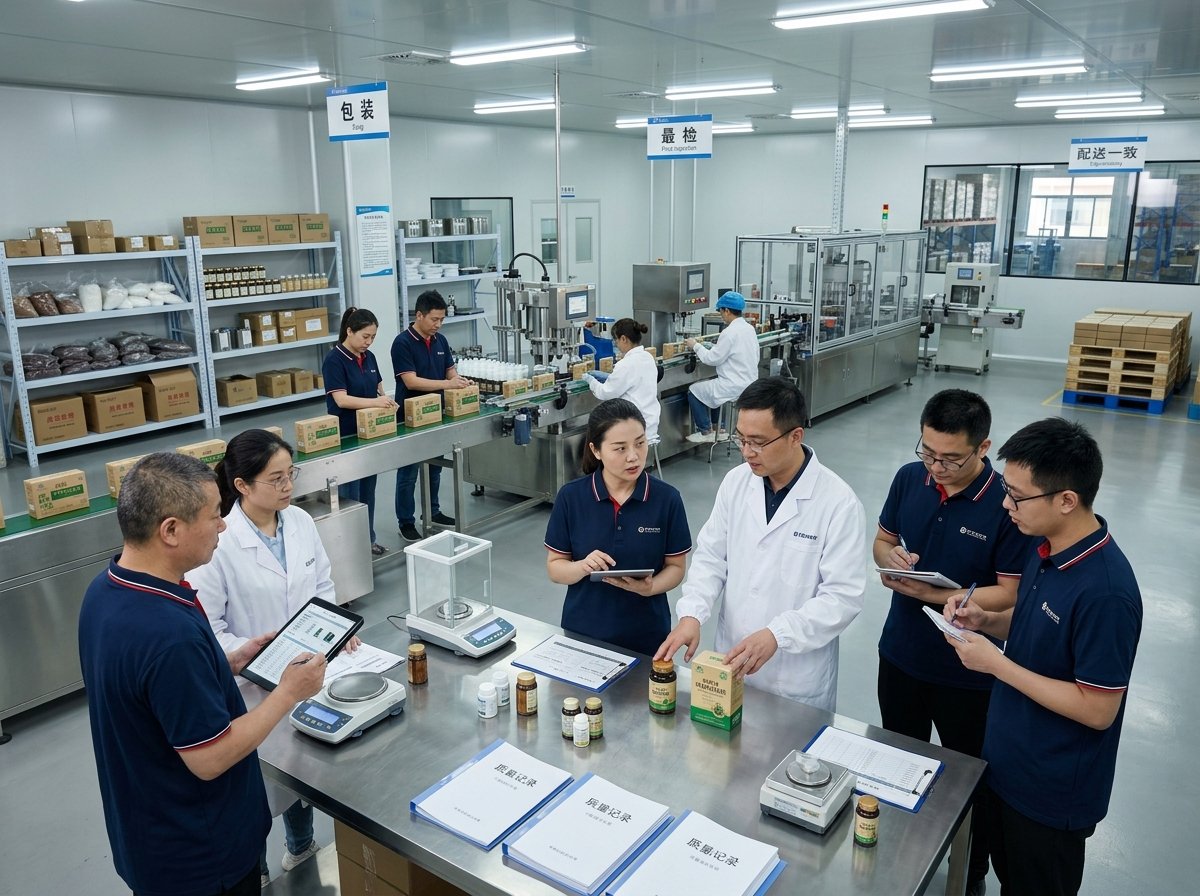
Many recurring complaints in the market come from poor manufacturing foundations rather than isolated mistakes. Common failures include surface tearing, cracking in high-stress zones, unstable motors, strong chemical odor, sticky surfaces, poor packaging protection, mismatched colors, loose structure, and delivered goods that look different from the approved images. In more serious cases, buyers face delayed shipment, missing accessories, wrong configurations, poor communication, or products that require immediate repair after arrival.
These problems usually begin much earlier than final inspection. They often start with weak material selection, poor wall-thickness design, low process control, insufficient validation, weak packaging engineering, or unclear order management. That is why a true manufacturing partner should not only quote and produce. A strong partner should also identify risk points, recommend structural improvements, validate durability boundaries, and document what can and cannot be promised.
This is where a factory model creates real value. A manufacturer with in-house design, R&D, and production management can connect product concept, technical review, tooling, sample revision, pilot run, and bulk production under one system. That gives buyers, distributors, and brand owners a more stable path than working through fragmented trading layers with limited technical ownership.
How to Evaluate an OEM Sex Toys Factory for Product Development and Private Label Projects?
An attractive quotation does not prove engineering depth. A clean website does not prove production control.
The best way to evaluate an OEM sex toys factory is to examine its product development ability, quality systems, customization depth, validation methods, and whether it can translate design intent into stable mass production.
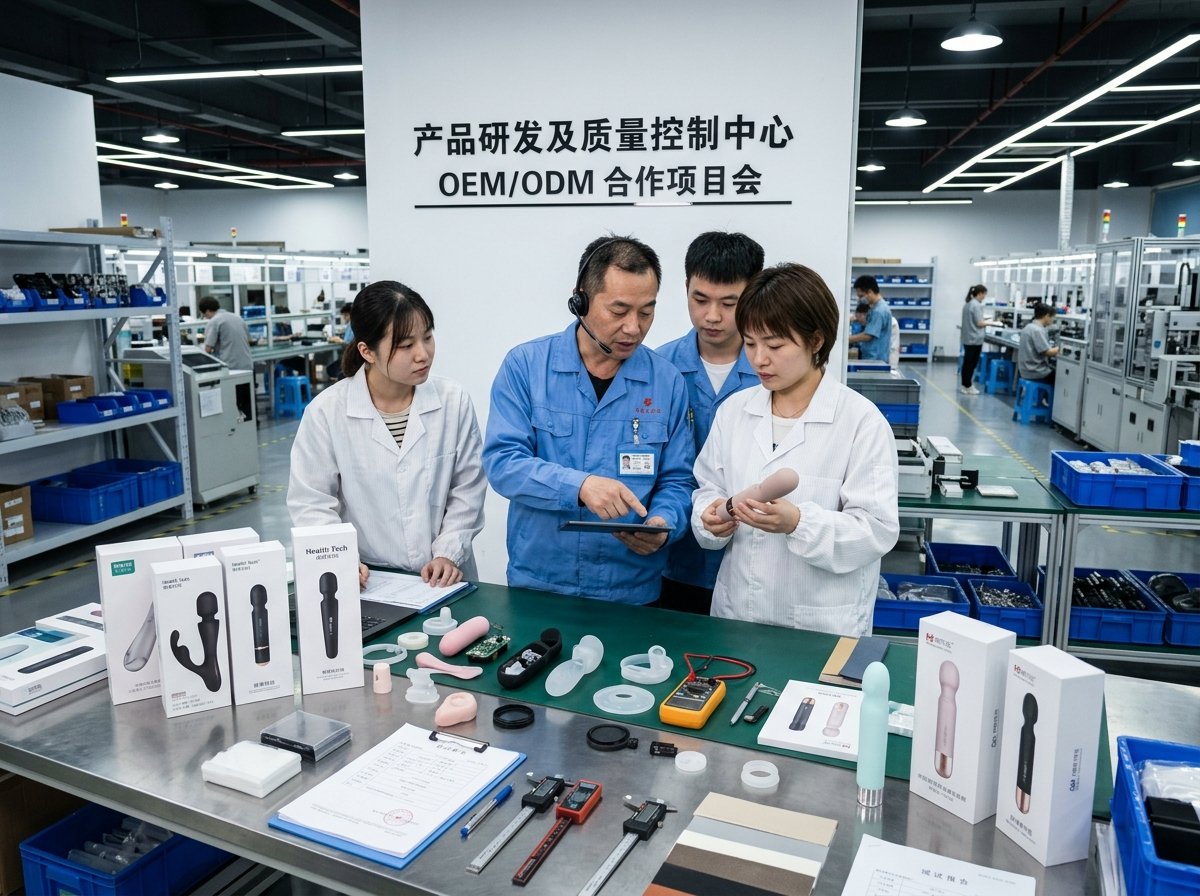
A useful evaluation should go beyond price and lead time. It should look at how the factory handles the full product path.
Product development capability
A serious OEM factory should be able to discuss materials, structural details, ergonomic targets, motor performance, battery integration, waterproof design, charging systems, packaging needs, and appearance consistency. Development strength becomes especially important when a project needs more than simple logo printing.
Sampling and revision logic
A strong factory should not treat samples as decoration. Samples should be used to test dimensions, touch, hardness, noise level, fit, user handling, packaging protection, and possible failure points. A supplier that only sends one attractive prototype but cannot explain revision records is a risk.
Private label execution
For private label projects, consistency matters as much as creativity. Brand owners need reliable control over logo placement, retail packaging, color matching, accessories, inserts, and carton presentation. The factory should show that private label work is not an afterthought but a structured process.
Order-to-production control
Many buyer complaints in this industry begin when approved details are not transferred correctly into production. A good factory should have a clear method for linking approved samples, BOM, artwork, SKU, packaging files, and final shipment records.
Real manufacturing identity
There is also a major difference between a true factory and a supplier that only outsources. A real manufacturer can usually answer detailed questions about tooling, material behavior, process settings, validation tests, and production checkpoints. That matters when projects need revision, troubleshooting, or long-term product planning.
What Production Standards Should Buyers Check First?
A factory may accept custom work, yet that does not mean its production system is ready for reliable adult product manufacturing.
Buyers should first check material control, molding consistency, assembly standards, finishing quality, packaging protection, and final inspection discipline. These areas decide whether the approved sample can survive real production.
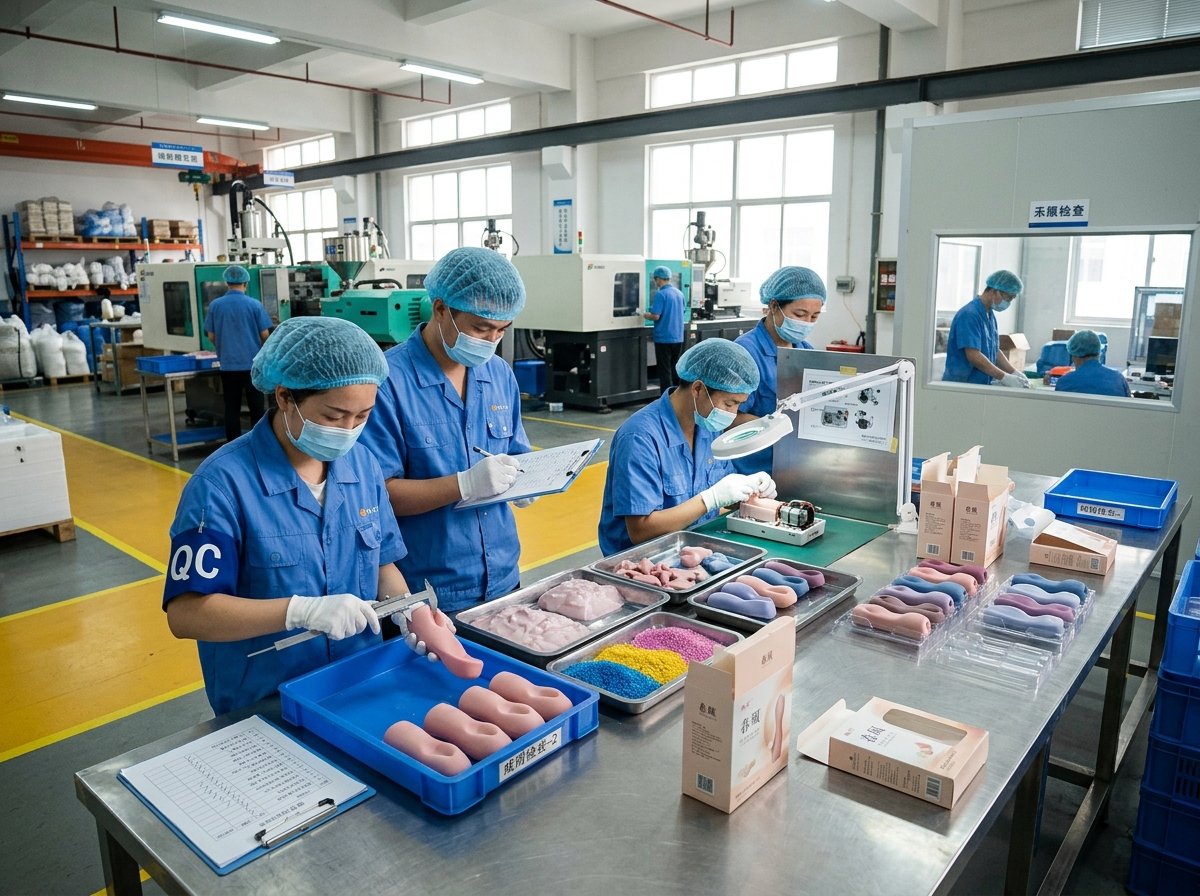
The adult products category brings several recurring technical risks. Some products fail because thin areas tear or deform. Some arrive with surface defects, odor, or visible mismatch. Others pass appearance checks but fail later due to weak internal assembly or poor durability. A useful production review should include:
| Production Area | What Should Be Checked | Why It Matters |
|---|---|---|
| Material control | Silicone grade, ABS quality, odor control, batch consistency | Prevents smell, stickiness, softness drift, and unstable finish |
| Mold and structure | Wall thickness, transition radius, seam position, high-stress zones | Reduces cracking, tearing, weak edges, and deformation |
| Assembly | Motor fit, battery housing, charging port, cable routing, sealing | Prevents noise, leakage, failure, and early malfunction |
| Surface finish | Scratch resistance, color consistency, cleanliness, texture | Protects retail appearance and customer first impression |
| Packaging | Internal protection, pressure control, accessory organization | Reduces shipment damage and missing parts |
| Final inspection | Appearance, function, labeling, configuration check | Prevents wrong orders and obvious defects from leaving the factory |
Production stability is not about one perfect sample. It is about whether the same result can be repeated across hundreds or thousands of units. This is especially important for buyers supplying e-commerce channels, distributors, and retail programs where return rates and review scores directly affect sales.
Which Compliance Standards Really Matter in Adult Toy Manufacturing?
A product may look market-ready, but missing or weak compliance preparation can block sales, create claims, or damage brand trust.
Key compliance standards in adult toy manufacturing usually include material safety, restricted substance control, electrical safety, labeling accuracy, market-specific documentation, and traceable quality records.
In this category, compliance is not only a paperwork matter. It affects platform access, customs clearance, product safety perception, and the ability to serve regulated markets. Buyers exporting to North America, Europe, and Japan often pay close attention to CE, RoHS, FDA-related material expectations, battery safety, and clean technical files. Even when final market rules differ by product type, the factory should understand how to prepare material declarations, test coordination, and production traceability.
Compliance review should include:
Material safety
Medical-grade silicone claims should not be used loosely. Material source, batch consistency, and restricted substance control must be documented.
Electrical and charging safety
For electronic adult products, charger compatibility, internal protection, cable quality, and waterproof construction must be validated, not guessed.
Labeling and retail file accuracy
Packaging text, barcode, warning statements, carton marks, and instruction manuals should match the approved product and market requirements.
Traceability
If complaints appear later, the factory should be able to trace material batch, production date, inspection data, and shipment record.
A reliable manufacturer should be prepared to discuss these points early rather than only after an order is placed. Factories with experience serving known brands as OEM and ODM partners usually perform better here because documentation discipline is already built into their normal workflow.
Why Is Confidentiality a Core Standard for OEM and Private Label Projects?
A product idea loses value quickly when designs, packaging, or channel strategy leak into the market too early.
Confidentiality matters because adult product development often involves new structures, exclusive packaging, custom molds, channel-sensitive launches, and brand positioning that can be damaged by copying or careless disclosure.
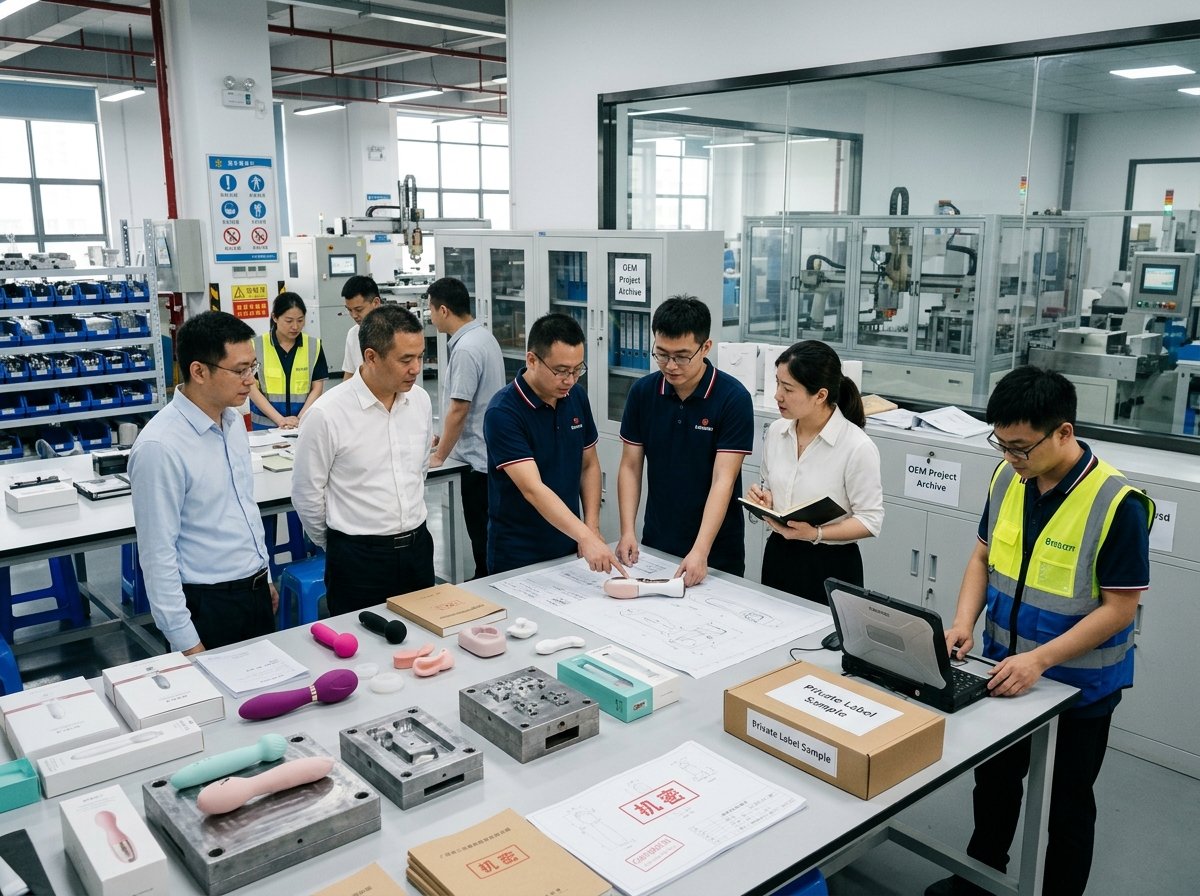
Confidentiality is often treated like a legal formality. In reality, it is part of factory discipline. Buyers should look for practical controls, not only signatures.
What strong confidentiality looks like
- Controlled access to drawings, prototypes, and artwork
- Clear approval flow for sample photos and production images
- Internal separation between active customer projects
- Supplier control over molds, packaging files, and custom accessories
- Consistent document naming and project coding
This category faces additional risk because copied images, copied molds, misleading listings, and unauthorized sellers are common market problems. A weak confidentiality system can lead to design leakage, fake listings, price erosion, and channel conflict.
A serious factory should understand that confidentiality protects both sides. It protects the buyer’s market plan, and it protects the factory’s professional reputation. This is especially important in projects involving exclusive molds, private label packaging, differentiated textures, or newly developed structures.
What Common Mistakes Do Buyers Make When Choosing an Adult Toys Manufacturer?
The biggest sourcing errors often happen before production even starts.
Common mistakes include choosing only by price, confusing traders with real factories, skipping validation, ignoring confidentiality, trusting edited photos, and failing to define quality standards in writing.
common mistakes when choosing an adult toys manufacturer
Several mistakes appear again and again in this industry:
Choosing the lowest price first
A low quotation may hide weaker materials, thinner walls, looser tolerances, weaker packaging, or reduced inspection effort. The result is often higher total cost later.
Treating one sample as full proof
A sample can be polished by hand. Mass production cannot rely on manual rescue. Process stability matters more than one attractive unit.
Ignoring high-risk complaint patterns
The market already shows repeated issues such as cracking, abrasion, odor, sticky surfaces, shipment damage, wrong configurations, and misleading images. A supplier should be asked how these problems are prevented.
Failing to verify communication structure
Many bad experiences come from poor follow-up after payment, unclear project ownership, and slow response during exceptions. Sales support should connect smoothly with engineering and production.
Leaving standards too vague
If logo size, color tolerance, hardness target, retail pack layout, accessory list, test method, and approval point are not documented clearly, disputes become much more likely.
Overlooking long-term fit
Not every factory is suitable for every project stage. Some are fine for standard ODM items. Others are stronger in deeper OEM development. The right fit depends on the project goal, not on a generic sales promise.
How Does a Real Factory Create More Value Than a Trading-Style Supplier?
A project becomes easier to control when technical ownership stays close to production.
A real factory adds value through direct engineering feedback, faster sample revision, better process control, stronger documentation, and clearer responsibility during problem solving.
real factory vs trading supplier adult toys
This difference matters in every stage. In development, in-house designers and R&D teams can adjust structures, textures, fit, and packaging details faster. In production, factory control makes it easier to align molding, assembly, and inspection standards. In communication, an internal sales team can coordinate directly with the technical side instead of passing messages through multiple layers.
For buyers building long-term product lines, this often leads to better outcomes:
- More stable private label execution
- Faster correction when sample issues appear
- Better control over product upgrades
- Clearer ownership of quality actions
- More confidence for repeat orders and expansion projects
Factories that have supported well-known brands as OEM and ODM partners usually understand that repeat business comes from consistency, not only from the first quotation. That experience often improves both product execution and communication quality.
What Should the Final Factory Selection Decision Be Based On?
A reliable manufacturer should be chosen by evidence, not by presentation alone.
The final decision should be based on technical ability, production discipline, compliance readiness, confidentiality control, communication quality, and whether the factory can support long-term product growth rather than only the first order.
final checklist for choosing an adult toys manufacturer
A strong adult toys manufacturer should be able to support product development, private label work, compliance preparation, confidentiality protection, and stable delivery under one organized system. That is especially valuable for brand owners, distributors, buyers, and factories seeking dependable manufacturing support rather than short-term trading convenience.
The best partner is rarely the one with the lowest number on the quote sheet. The best partner is usually the one that can explain material behavior clearly, improve risk points before mass production, document every approved detail, protect confidential information, and deliver products that truly match the agreed standard. A real factory with in-house design, R&D, and sales support creates stronger control over quality, timeline, and repeatability. For companies planning OEM or private label adult product projects, a careful factory evaluation at the beginning can prevent costly complaints, protect brand reputation, and create a much more stable path for long-term cooperation. Contact and project inquiries are welcome for teams looking for a manufacturing partner with real factory capability and structured OEM/ODM support.